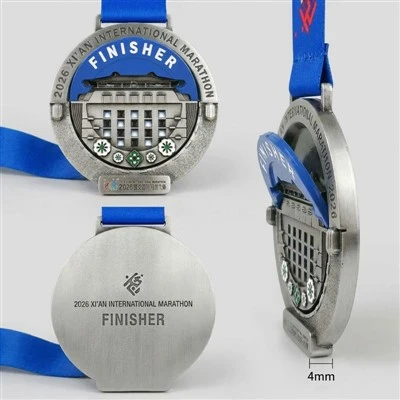
The density of event medals depends primarily on the materials used in their manufacture. Since medals are typically made from metals, alloys, or composite materials, there are significant variations in density across different material types. Understanding material density assists manufacturers in weight design, cost control, and quality assessment.
In actual production, density is not the sole criterion for evaluating event medals; factors such as dimensions, thickness, and structural design must also be considered. For instance, among medals of the same size, a copper medal feels heavier in the hand due to its higher density; conversely, while a zinc alloy medal has a slightly lower density, a premium tactile feel can still be achieved by increasing its thickness or employing a three-dimensional design.
Among common metal medals, zinc alloy is currently the most widely used material due to its moderate cost and processing versatility, whereas materials like copper and stainless steel are typically reserved for high-end medals or those intended as collectibles. During production, manufacturers usually calculate material requirements based on target weight specifications and use density data to minimize weight deviations in the finished product.
Overall, reference values for medal density serve primarily to guide material selection and product design. Selecting an appropriate material density not only influences the medal's tactile quality and overall feel but also helps strike a balance between aesthetics, cost, and the user experience.