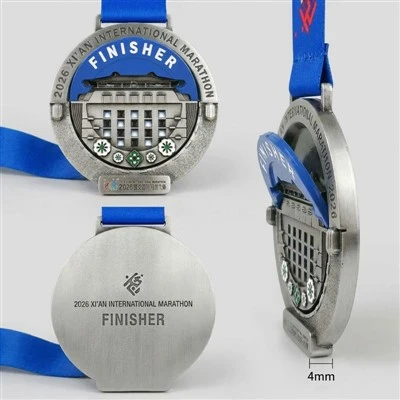
The origins of honorary medals can be traced back to ancient practices of recognizing honor and achievement. Early forms of recognition-such as orders, badges, and commemorative tokens-were used to reward individuals who excelled in warfare, athletic competitions, cultural endeavors, and social activities. As society evolved, medals transitioned from mere symbols of status into significant vessels for recording honors and commemorating important events.
Forms of honorary awards existed in ancient athletic activities. During the Ancient Olympic Games, victors received symbols of glory-such as olive wreaths-to signify their outstanding performance in competition. Although metal medals in the modern sense did not yet exist, this practice of using physical objects to convey recognition laid the groundwork for the subsequent development of medal culture.
With the rise of modern sports competitions, medals became a primary method of rewarding achievement. Following the revival of the Olympic Games in the late 19th century, the gold, silver, and bronze medal system became standardized and was widely adopted by sporting events across the globe. Medals signify not only a competitor's ranking but also the spirit of hard work and the pursuit of excellence.
Beyond the realm of sports, honorary medals are now utilized in education, the corporate world, the military, charitable causes, and various social recognition programs. Through diverse design elements and craftsmanship, different types of medals reflect the specific contributions and achievements of the recipients. For instance, corporate medals may highlight team value, while commemorative medals serve to document significant events and special moments.
The design and production of modern honorary medals have continuously evolved. Moving beyond traditional metal, contemporary medals often incorporate materials such as crystal, wood, and acrylic, alongside techniques like relief sculpting, engraving, electroplating, and hand-painting. These advancements ensure that medals serve not only as instruments of recognition but also as objects of artistic appreciation and collectible value.