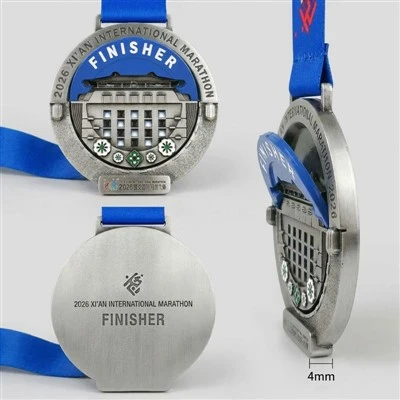
The classification of event medals is typically determined by competition results, the event's tier, and established award criteria. While different types of events employ various classification systems, the most common approach categorizes medals into three primary tiers-gold, silver, and bronze-based on ranking to reflect the varying levels of achievement.
Gold medals generally represent the highest honor and are awarded to the athlete or team finishing in first place. Their design often stands out through the use of premium materials, exquisite craftsmanship, and unique styling, embodying the prestige of the championship and the value of the event. In major competitions, gold medals may also incorporate symbolic thematic elements to enhance their commemorative significance.
Silver medals are typically awarded to second-place finishers, signifying outstanding performance and a high level of athletic ability. While their design usually aligns with the style of the gold medal, they are distinguished by color or surface finish. Despite the difference in tier, they hold significant commemorative value.
Bronze medals are primarily awarded to third-place finishers, recognizing their impressive performance. Often crafted with a bronze or antique-bronze finish, they maintain a unified design aesthetic while using material and color to distinguish their tier.
Beyond the traditional gold, silver, and bronze tiers, some events introduce additional medal categories based on specific needs-such as participation medals, commemorative medals, excellence awards, or special contribution awards-to encourage broader participation or recognize unique contributions. Although these medals are not based primarily on competition rankings, they serve as meaningful mementos and sources of motivation.
From a manufacturing perspective, medals of different tiers are distinguished by factors such as materials, surface finishes, and packaging. High-level events might feature intricate relief work, specialized plating, or premium packaging, whereas medals for standard events prioritize practicality and cost-effectiveness.
The classification of event medals reflects both competitive achievement and the organizers' recognition of the participants. A well-structured tier system enhances the ceremonial nature of the event, ensuring that every medal embodies the appropriate level of honor and commemorative significance.