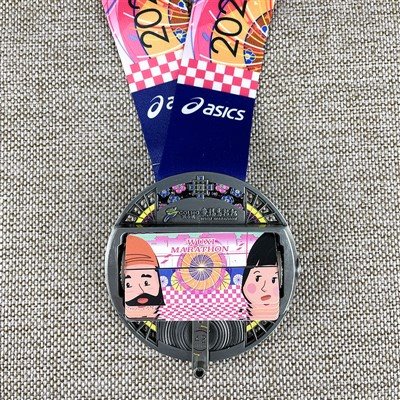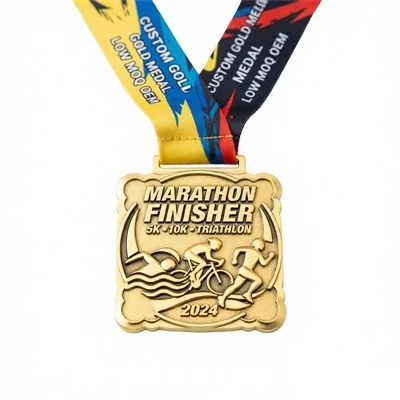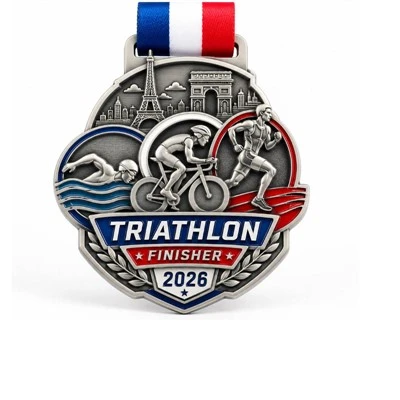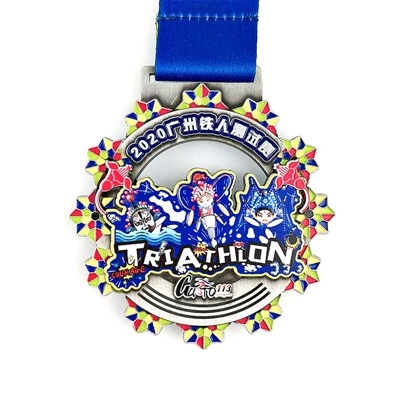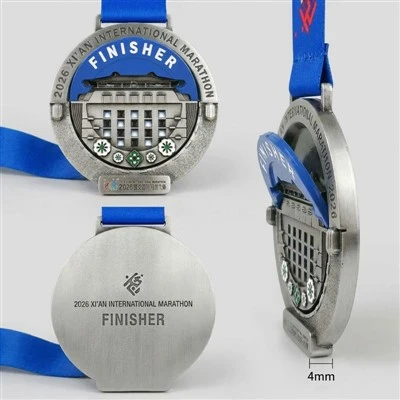
Designers create the medal's patterns, text, dimensions, and shape based on the event theme, corporate culture, or specific requirements provided by the client. Once the design is finalized, renderings are produced using 3D modeling or professional drafting software, followed by the creation of production molds. The quality of the mold directly impacts the definition of relief details, the precision of lines, and the overall accuracy of the medal.
Common molding processes include die-casting, stamping, and casting. Zinc alloy medals typically utilize die-casting, where molten metal is injected into a mold at high temperatures to form the medal body-a method ideal for complex, three-dimensional shapes. Iron or copper medals often employ stamping, which shapes metal sheets using pressure and offers high production efficiency.
The grinding process is primarily used to remove burrs and ensure the medal's edges are smooth and even. Subsequently, treatments such as electroplating, polishing, brushing, sandblasting, enamel coating, epoxy doming, or color filling are applied based on design specifications; these processes create visual effects-such as gold, silver, or antique bronze finishes-while enhancing surface durability.
For custom medals requiring intricate patterns and text, techniques such as engraving, laser marking, or 3D relief are employed to ensure that details like event names, logos, and serial numbers are clearly defined. Some high-end medals incorporate multi-layered structures, cut-out designs, or combinations of different materials to enhance depth and artistic appeal.
The production of custom medals integrates creative design, metalworking, and surface finishing technologies. By carefully selecting materials and processes, manufacturers can produce high-quality medals that align with the event's theme while offering collectible value and commemorative significance.